
ISO 9001:2026 was published on 16 September 2026, and every certified company now has three years to move to it. The structure you know is staying. What changes is the weight on leadership, quality culture, opportunities and change, and how much of that an auditor will want to see on the shop floor instead of in the manual.
This guide is for quality managers in manufacturing companies certified to ISO 9001 or ISO 14001, and for the production managers who work next to them. It covers what changed, the real deadlines, and which production records can count as evidence at your transition audit, clause by clause.
ISO 9001:2026 quick summary
Published: 16 September 2026 (sixth edition), replacing ISO 9001:2015.
Deadline: ISO 9001:2015 certificates stay valid until the end of the three-year transition, in September 2029.
What’s new: quality culture and ethical behaviour (5.1, 7.3), a quality policy tied to strategy (5.2), risks and opportunities handled separately (6.1), stronger management of change (6.3) and climate change as part of your context (4.1, 4.2, in force since 2024).
What stays: the clause structure, the process approach, PDCA, risk-based thinking and the rules for documented information.
What it means in the audit room: auditors will look harder at behaviour and results. Records made when something happened will carry more weight than records put together afterwards.
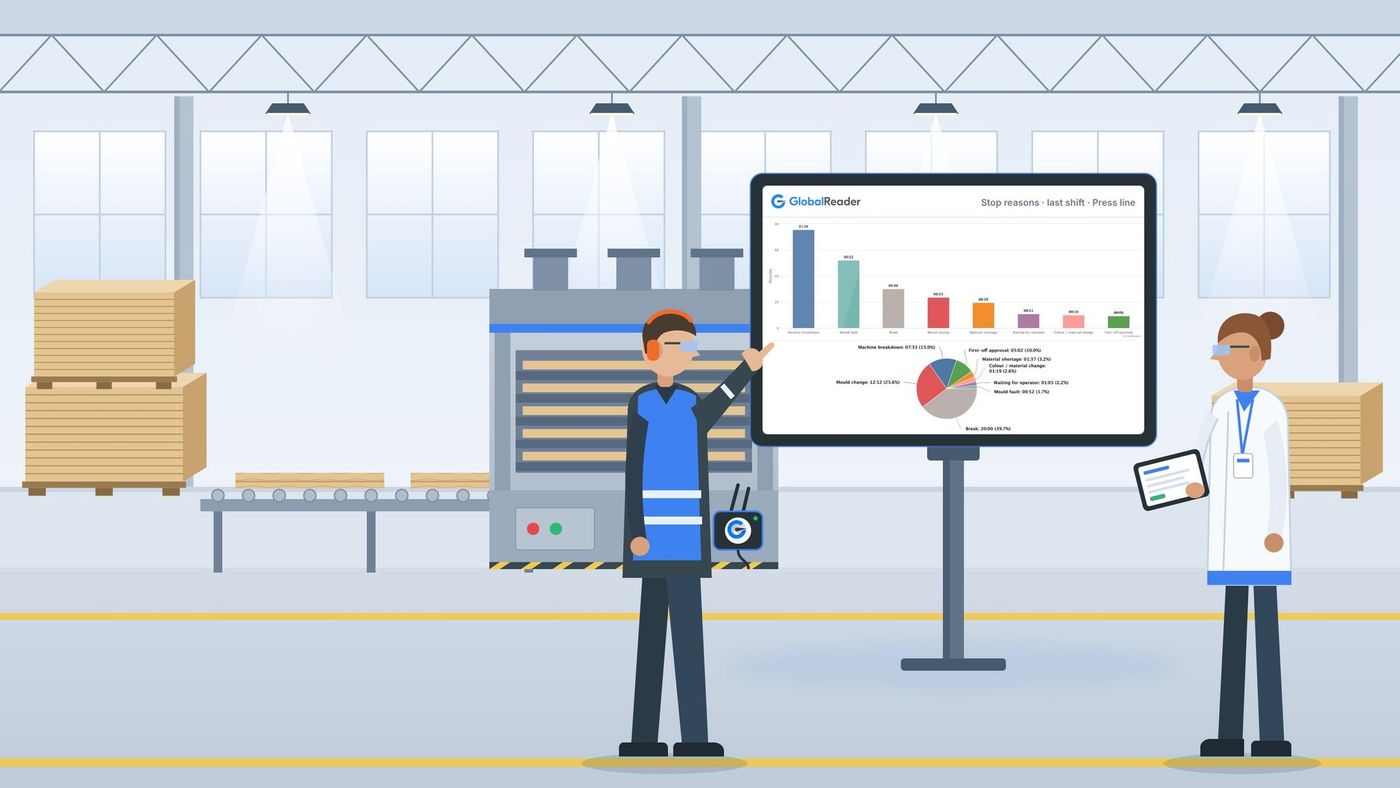
Is ISO 9001:2026 out, and when do you have to transition?
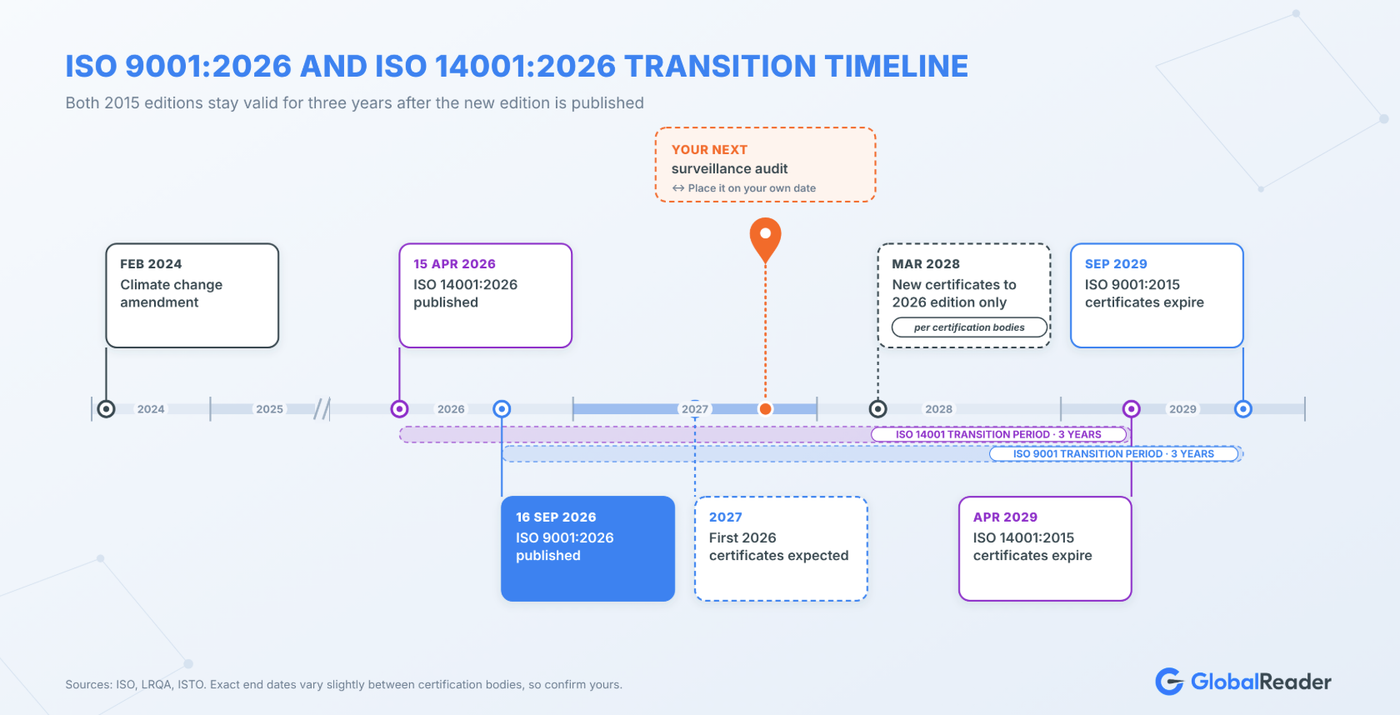
Yes. ISO published ISO 9001:2026 on 16 September 2026, and organisations certified to the 2015 edition have three years to transition. LRQA gives the end date as 30 September 2029; your current certificate stays valid until then.
| ISO 9001:2026 | ISO 14001:2026 | |
|---|---|---|
| Published | 16 September 2026 | 15 April 2026 |
| Transition period | 3 years | 3 years |
| 2015 certificates valid until | September 2029 | April 2029 |
| Transition audit | At a surveillance or recertification visit, or separately | Same |
| Can you combine them? | Yes, many certification bodies will run integrated transition audits | Yes |
Exact end dates vary slightly between certification bodies, so confirm yours.
Three things about the timing are worth knowing:
You don’t need a separate audit. The transition can be assessed at a surveillance or recertification visit you already have booked (LRQA). That is usually the easiest route for a mid-sized plant.
Your certification body has to get ready first. Certification bodies need their own accreditation and auditor training before they can issue 2026 certificates, so most first certificates will come in 2027. Ask yours when it expects to be ready.
The last year will be crowded. LRQA warns that audit capacity will be tightest in the final year of the window. One certification body, ISTO, also reports that from 31 March 2028 new initial certifications will only be issued to the 2026 edition.
The 2024 climate change amendment (the “climate action changes” agreed by ISO and IAF in February 2024) has been in force since it was published. It’s now written into the 2026 text, but it isn’t new for your transition audit.
If you need the standard itself, it’s sold by ISO and national standards bodies such as EVS in Estonia, PKN in Poland and SFS in Finland.
What changed in ISO 9001:2026?
NSF calls the revision “an evolution, not a revolution”, and the other certification bodies describe it the same way. The clause structure is the same as in 2015. The changes sit mostly in leadership, planning and awareness, plus a much larger explanatory annex. Below is each change in more detail, with what it looks like in a factory.
Climate change is part of your context (4.1, 4.2)
You have to decide whether climate change is a relevant issue for your quality management system, and interested parties (your customers, for example) may have climate-related requirements. Deciding it isn’t relevant is allowed, as long as you actually considered it and can show why.
In a factory: heat in summer affecting a process or the people running it, a supplier exposed to flooding or drought, or an automotive or retail customer asking for climate data. For most plants, the useful question is whether any of this would affect the quality of what you ship.
Leadership has to promote quality culture and ethical behaviour (5.1, 7.3)
ISO says clause 5.1 places “greater emphasis” on quality culture and ethical behaviour, and 7.3 adds the matching awareness requirement: people doing the work should understand both.
Quality managers might be a little uneasy about this one. SGS explains it directly: “A framed code of conduct is not evidence.” Auditors will look at what happens, such as whether an operator can stop production over a defect, and how leaders balance quality against a shipment date.
There’s also a business case behind the clause. In research published in Harvard Business Review, employees at companies with the strongest quality cultures reported dealing with 46% fewer mistakes than those at the weakest. That study covered large companies, but the pattern will be familiar to anyone who has worked in a plant where people are afraid to stop a line.
The quality policy is tied to strategy (5.2)
Your quality policy now has to be explicitly linked to your context and strategic direction (ISO). If your strategy talks about growth, export or delivery reliability, the policy should say how quality supports it.
Risks and opportunities are handled separately (6.1)
In 2015 they were one requirement. Now actions for risks and actions for opportunities are separate. The informative Annex A is direct about it: risks are not opportunities (ISTO).
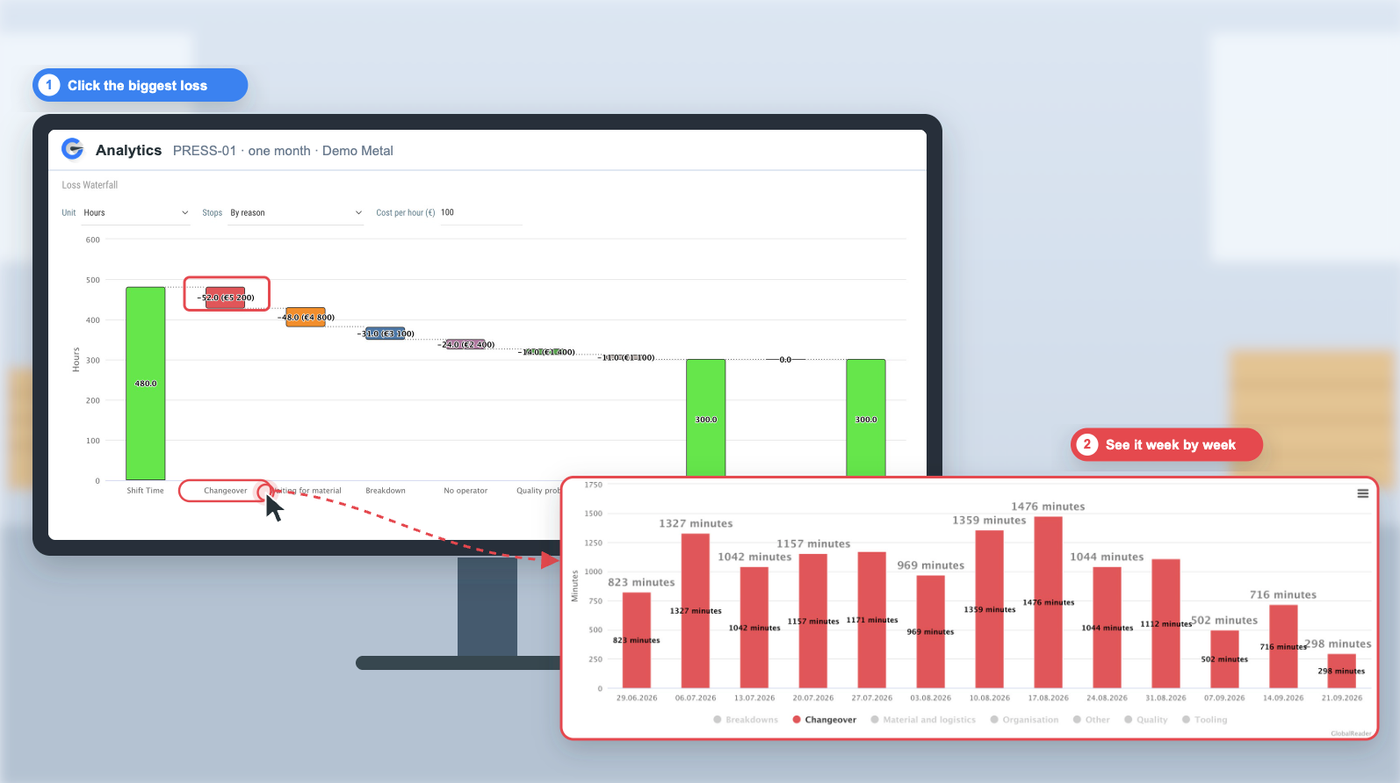
In a factory: “machine 4 might fail” is a risk. “We could get 400 more hours a year out of the press line if changeovers were shorter” is an opportunity. Expect your auditor to ask which opportunities you chose to pursue, who owned them and what came of them.
Changes have to be managed, and checked afterwards (6.3)
The requirement for planning changes is stronger. ANSI and NSF both describe it as planning, communicating, monitoring and reviewing significant changes. The record most plants are missing is the last one: proof that a change was checked for its effect on quality after it was made.
Smaller changes worth knowing
Terms and definitions: clause 3 now includes a short list of core terms instead of relying only on ISO 9000 (ANSI).
Annex A has grown into a guide to the intent behind the requirements. It adds no new obligations, but it’s useful reading before the audit.
Annex B (the list of related standards) has been removed.
Organisational knowledge gets more attention. NSF highlights how organisations identify, keep, share and apply what they know.
| Area | ISO 9001:2015 | ISO 9001:2026 | What an auditor may ask a manufacturer |
|---|---|---|---|
| Context (4.1, 4.2) | Internal and external issues | Climate change considered explicitly | “Did you consider climate change? Where’s your reasoning?” |
| Leadership (5.1) | Leadership and commitment | Plus promoting quality culture and ethical behaviour | “Show me a time quality won over a delivery date” |
| Policy (5.2) | Appropriate to purpose and context | Explicitly linked to strategic direction | “How does your policy support your strategy?” |
| Planning (6.1) | Risks and opportunities together | Separate actions for each | “Which opportunities did you pursue this year, and with what result?” |
| Change (6.3) | Planning of changes | Stronger planning, monitoring and review | “How did you check this change worked?” |
| Awareness (7.3) | Policy, objectives, contribution | Plus quality culture and ethical behaviour | Operators asked what they’d do if they saw a defect |
What didn’t change, and where factories still get findings
Most of the standard is the same. The process approach, PDCA, risk-based thinking and the rules for documented information all carry over. For a manufacturer that matters, because the clauses where shop floor findings usually come from haven’t moved:
7.1.3 Infrastructure: is equipment maintained, and can you show it?
7.1.5 Monitoring and measuring resources: are gauges and instruments calibrated?
7.1.6 Organisational knowledge: what happens when your most experienced setter retires?
8.5.1 Control of production: are checks done when they should be?
8.7 Control of nonconforming outputs: what happened to scrap and rework, and why?
9.1.3 Analysis and evaluation: how do you analyse performance data?
9.3 Management review: what went in, and what came out?
10.2 Nonconformity and corrective action: did the fix work?
The 2026 changes raise the bar on proof, and most of that proof lives in these clauses. The knowledge point is getting harder too. The Manufacturing Institute estimates US manufacturers will need up to 3.8 million new employees by 2033, with up to 1.9 million roles at risk of going unfilled. Every experienced person who leaves takes knowledge with them that your records were supposed to keep.
What auditors will ask a manufacturer to show
Most of the new requirements can’t be met with a new procedure alone. They’re about behaviour, and behaviour shows up in records made at the time. Three of them land directly on the shop floor.
“Can an operator stop the line?” What to show
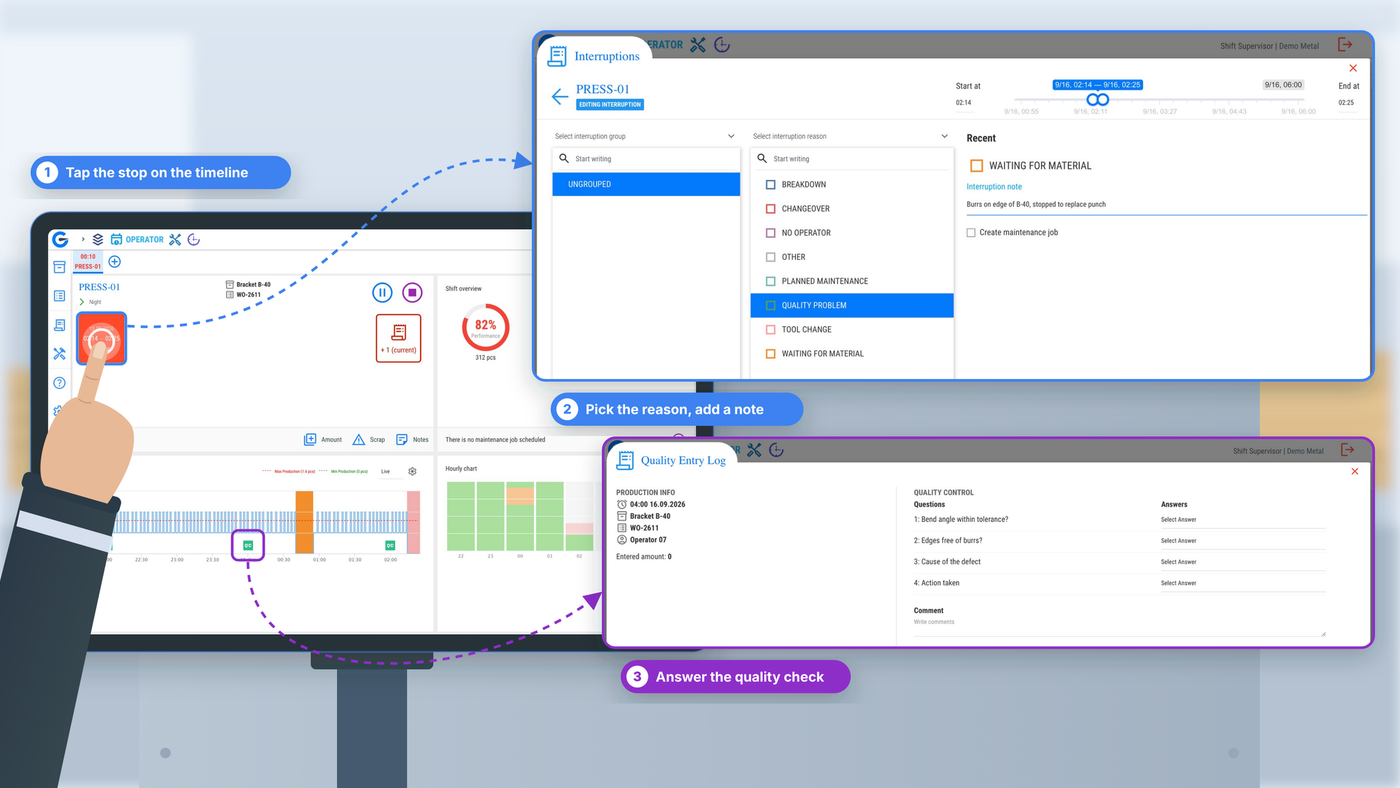
An auditor testing quality culture will sample real events. Useful records:
stops logged with a quality reason, who raised them and what happened next;
quality problems escalated during the shift, not discovered at the end of the week;
a regular review of those stops, with actions.
One caution: this kind of data only shows a healthy culture if operators trust it. If stop reasons are used to find someone to blame, people stop recording them honestly, and you lose the very evidence you were trying to build. The plants that do this well treat the operator’s log as protection: an objective record of what actually happened, so nobody has to argue from memory.
At Balti Spoon, a decorative veneer producer in the Möhring Group, the Quality Manager owns the GlobalReader programme. Operators run a mandatory checklist at the start of every shift, a quality check pops up every two hours, and the weekly downtime summaries go up on screens for everyone in production to see. In Balti Spoon’s words: “The operators are very diligent in logging comments that I can then direct straight to the production side or the technical side.”
Opportunities with owners and results (6.1)
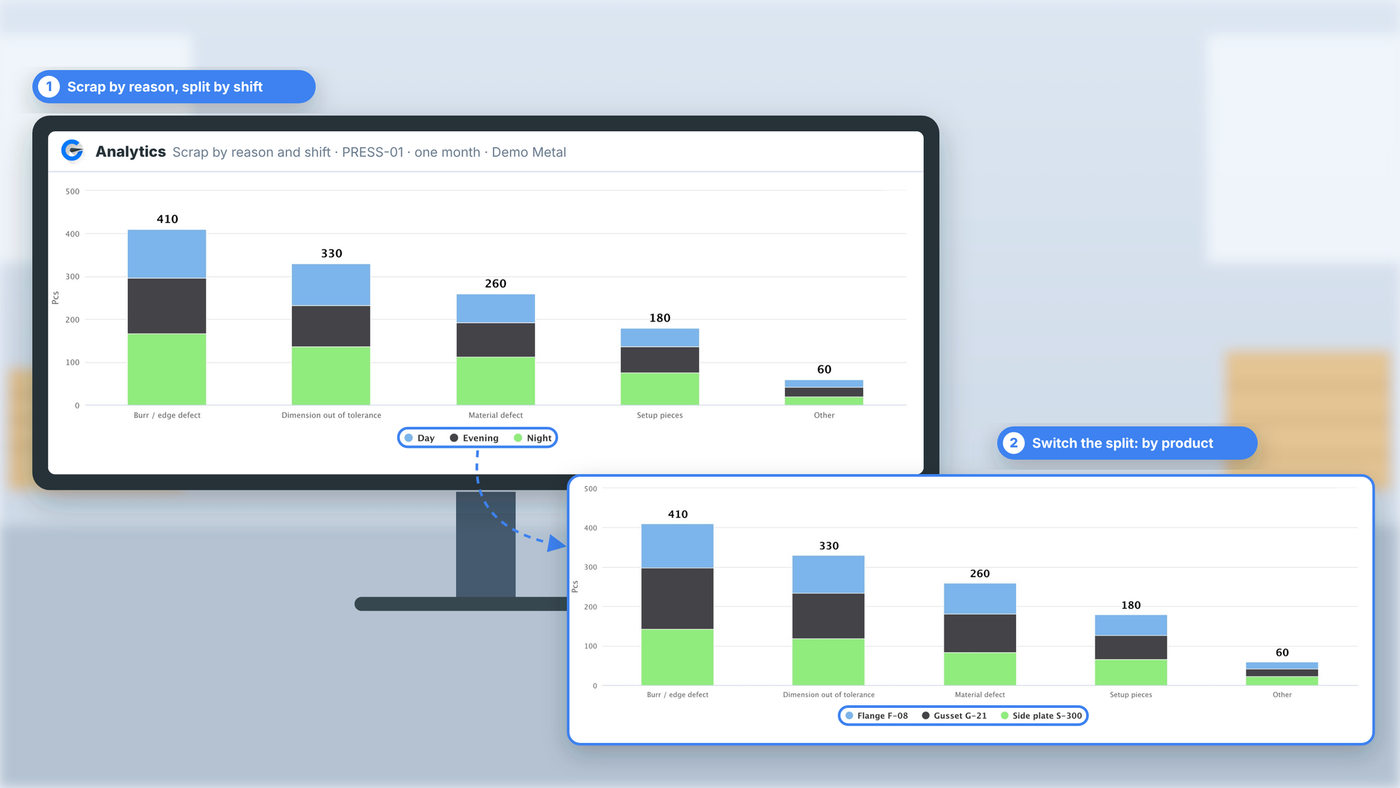
The simplest opportunity record is a loss breakdown: where production time went last month, by cause, in hours. Multiply those hours by what a machine hour is worth to you and you have the opportunity in euros. It shows which opportunity is biggest, and the same data shows whether the action you took moved it. Our guide to downtime analysis explains how to build one.
Did the change work? Before and after (6.3)
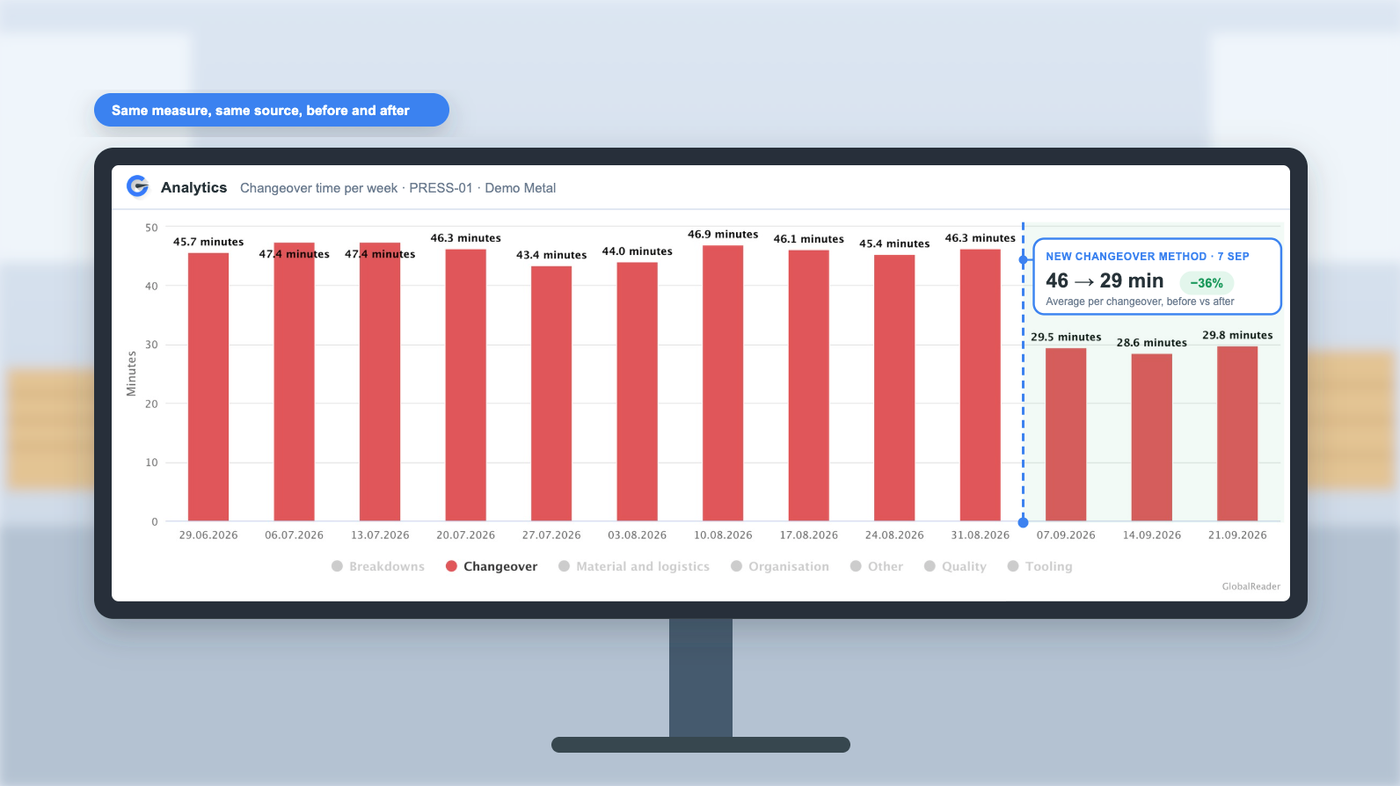
You changed a changeover method, added a new reason code, moved an inspection or bought a module for one line. The record an auditor wants is the same measure before and after the change, from the same source, so the comparison is fair. A paper log rarely gives you that, because the “before” was never written down in the same way.
Where automatic production data fits as audit evidence
Automatic production data is a record of what machines and people actually did, captured when it happened. In an audit it serves as objective evidence for several ISO 9001 requirements, as long as your definitions are agreed and used consistently. Your quality management system stays in place, and the data gives it something solid to point to.
What is objective evidence? Objective evidence is data that shows something exists or is true, obtained by observation, measurement, testing or another method. In an audit, it’s the record the auditor can sample and check, not what someone remembers.
Why time-stamped, automatic records carry more weight
Think about how a typical stop record is made today. The operator writes it at the end of the shift, from memory, if there’s time. The night shift’s version is shorter. Someone types it into Excel on Monday. By the time an auditor samples it, it has been rewritten twice.
This is actually pretty common. In a 2026 survey, half of manufacturers said they still rely on manual frontline logs, paper records and spreadsheets to make decisions. As Balti Spoon’s Quality Manager put it about the time before they measured: “A lot of info got lost and there was a lot of frustration.”
Records captured automatically have four things going for them in an audit. They’re made at the moment of the event. They cover every shift the same way. They use the same definitions every day. And they can’t be put together the night before.
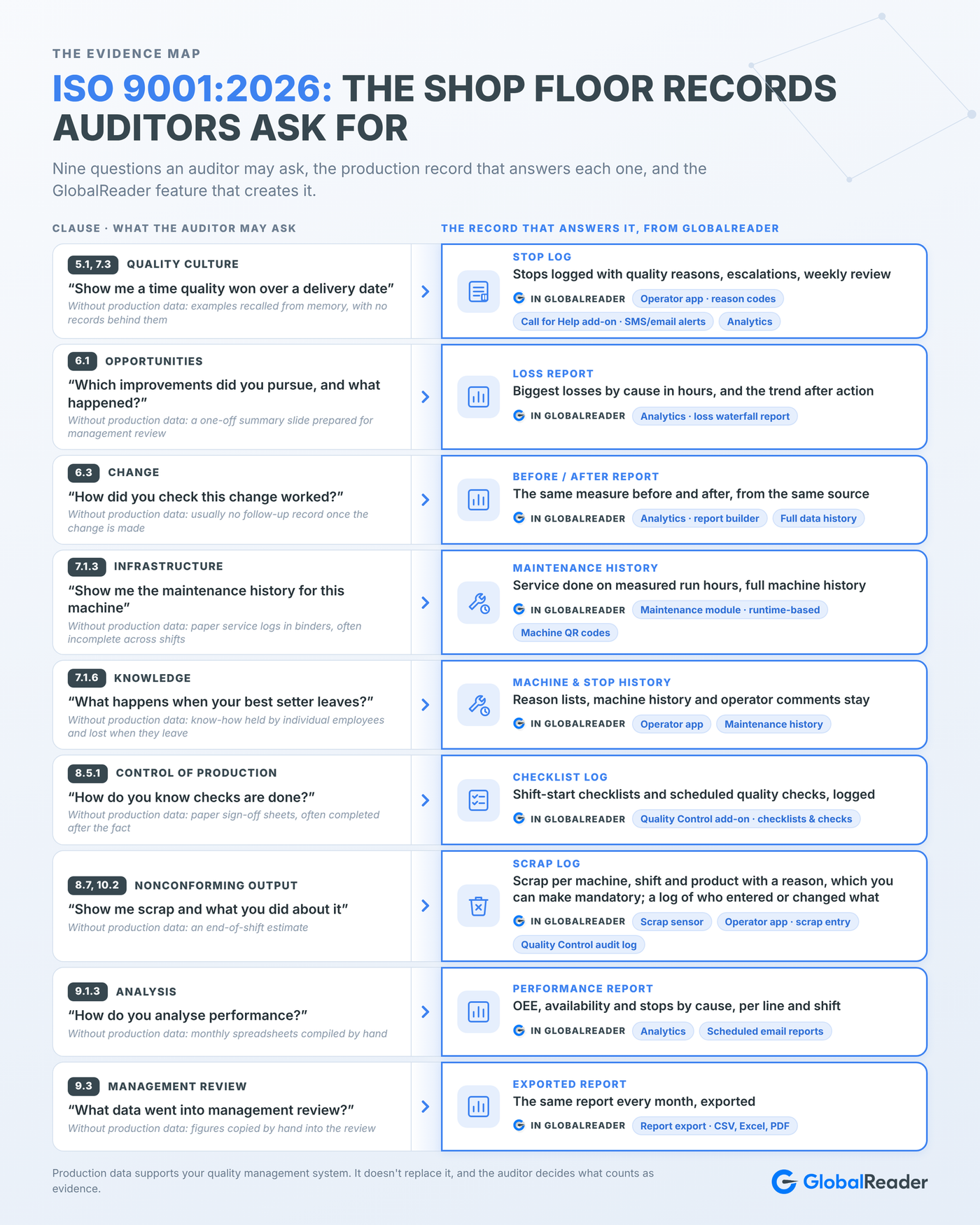
The evidence map: ISO 9001 clauses and the production records that support them
| Clause | What the auditor may ask | Without production data | With production data | GlobalReader module |
|---|---|---|---|---|
| 5.1, 7.3 Quality culture | “Show me a time quality won over a delivery date” | Examples recalled from memory, with no records behind them | Stops logged with quality reasons, escalations, weekly review | Operator reason codes, Call for Help (SMS or email), Analytics |
| 6.1 Opportunities | “Which improvements did you pursue, and what happened?” | A one-off summary slide prepared for management review | Biggest losses by cause in hours, and the trend after action | Analytics, loss waterfall report |
| 6.3 Change | “How did you check this change worked?” | Usually no follow-up record once the change is made | The same measure before and after, from the same source | Analytics report builder, full history |
| 7.1.3 Infrastructure | “Show me the maintenance history for this machine” | Paper service logs in binders, often incomplete across shifts | Service done on measured run hours, full machine history | Maintenance (runtime-based preventive maintenance), machine QR codes |
| 7.1.6 Knowledge | “What happens when your best setter leaves?” | Know-how held by individual employees and lost when they leave | Reason lists, machine history and operator comments stay | Operator, Maintenance history |
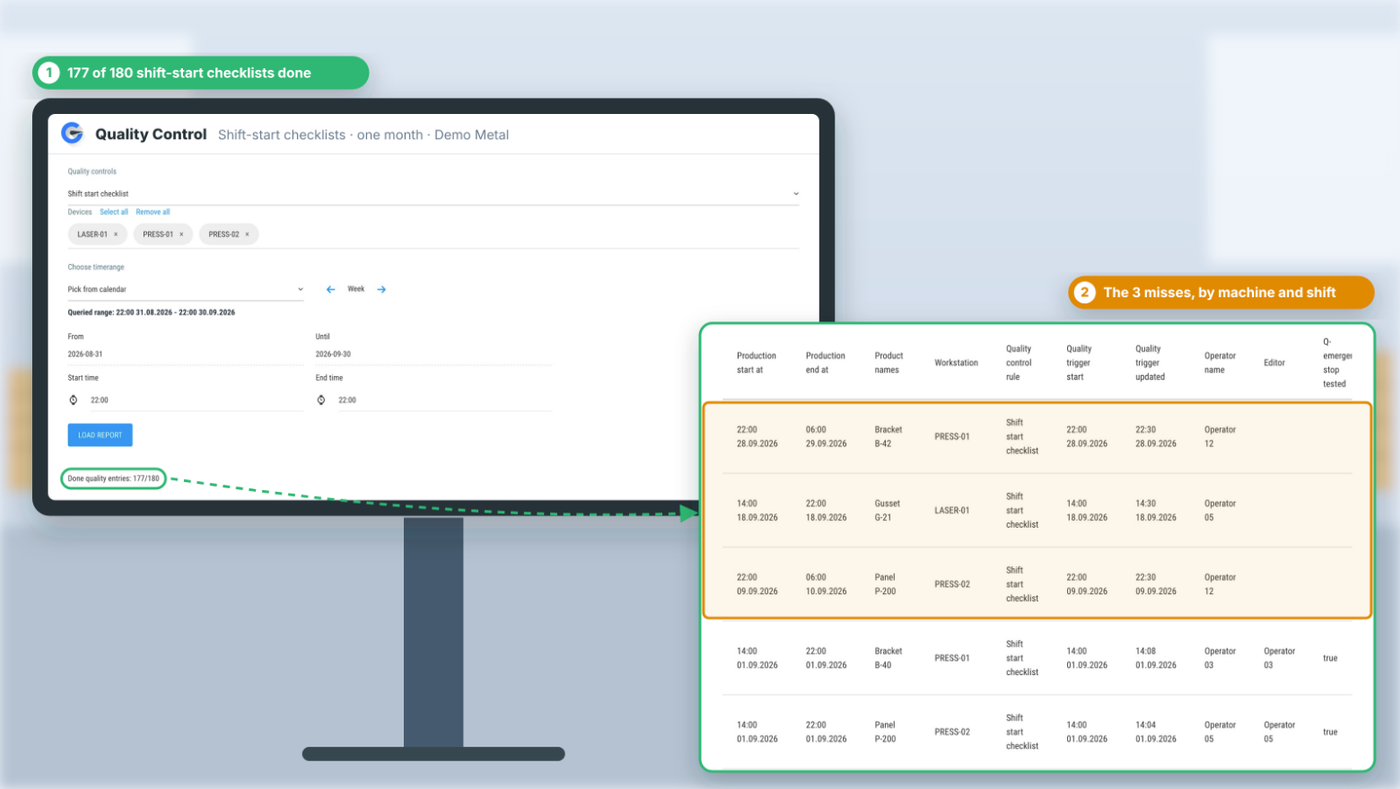
| 8.5.1 Control of production | “How do you know checks are done?” | Paper sign-off sheets, often completed after the fact | Shift-start checklists and scheduled quality checks, logged | Quality Control add-on |
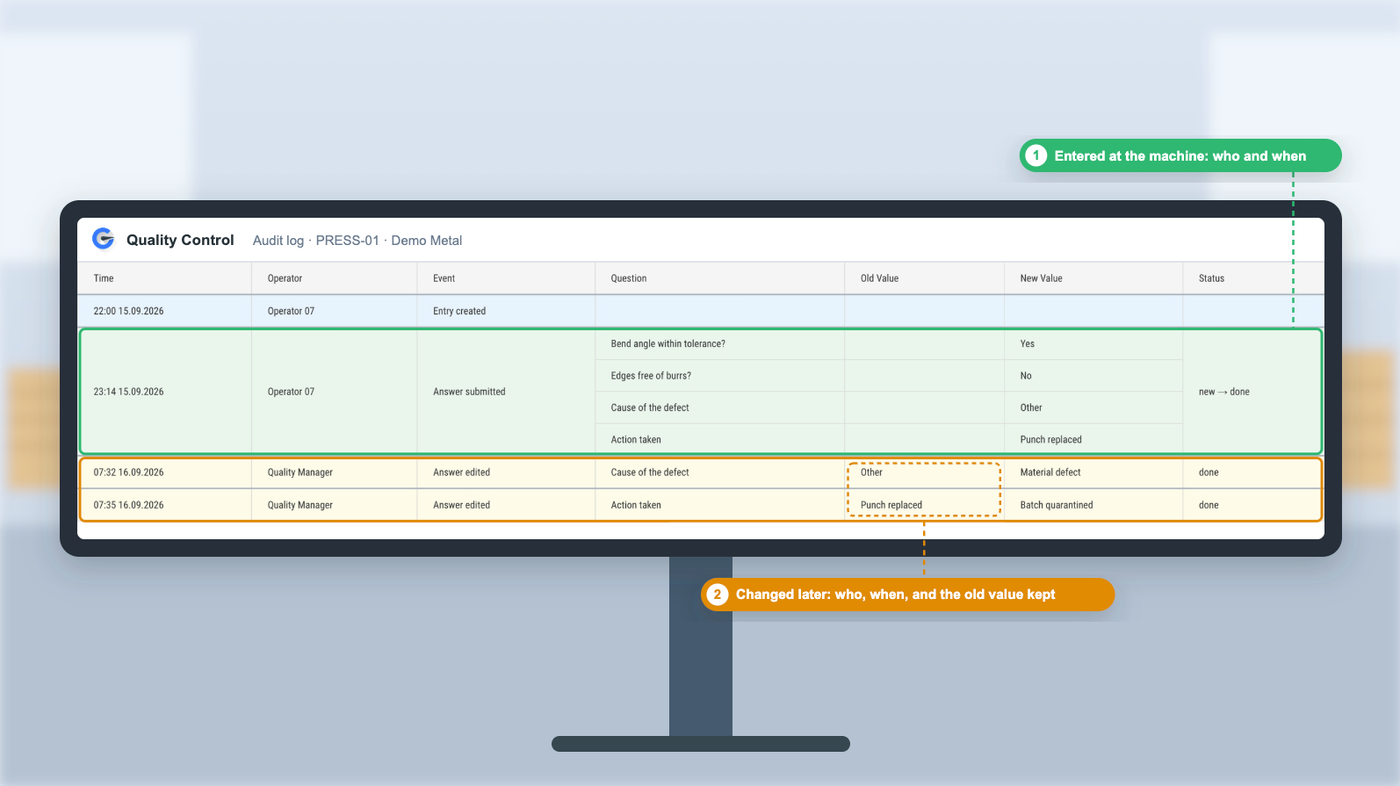
| 8.7, 10.2 Nonconforming output | “Show me scrap and what you did about it” | An end-of-shift estimate | Scrap per machine, shift and product with a reason, which you can make mandatory; a log of who entered or changed what | Scrap sensor, operator scrap entry, Quality Control audit log |
| 9.1.3 Analysis | “How do you analyse performance?” | Monthly spreadsheets compiled by hand | OEE, availability and stops by cause, per line and shift | Analytics, scheduled email reports |
| 9.3 Management review | “What data went into management review?” | Figures copied by hand into the review | The same report every month, exported | CSV, Excel and PDF export |
What auditors ask for in practice
A few examples from plants that use GlobalReader data in their audits:
Two weeks to measure every warehouse. Tere Põlva dairy factory had an ISO and BRC audit coming that required warehouse temperature and humidity to be measured and recorded continuously. They only had two weeks. GlobalReader supplied 21 devices, including sensors rated to -50 °C, fine-tuned them against Tere Põlva’s own certified thermometer, set up SMS alerts when limits were crossed and built a TV view with a factory map. Everything was in place before the audit.
Stop reasons the technical team can act on. At a wood products manufacturer, an ISO audit asked for information systems to be aligned so that an operator could raise a job for the technical department, with the stop reason and feedback attached.
Quality checks at the end of the order, too. At another wood manufacturer, the ISO audit asked for a quality check at the end of each production order, not only at the start. They now record checks at both points.
Years of records, on request. A timber house manufacturer has kept its production log, including quality checks, in GlobalReader since 2019, and receives it year by year as CSV files.
Can the auditor trust the data?
Before you put production data in front of an auditor, you’ll want to know it’s complete and that any changes can be seen. This is what sits behind GlobalReader’s records:
The Quality Control add-on keeps an end-to-end log of who entered or changed what.
Readings are buffered on the device, so a network drop doesn’t create gaps: if the machine is powered, what it measures is kept.
You can query your full history for as long as you’re a customer, up to 10 years back.
Data is stored on servers in Europe, and on-premise deployment is possible if your policies require it.
Reports export to CSV, Excel and PDF, so the auditor sees the same numbers you do.
GlobalReader data is evidence of what your standard asks you to show. Your auditor still decides what it proves.
Production data and your QMS: how they fit together
Your QMS holds what you’ve decided to do: procedures, nonconformity reports, corrective actions, internal audits. Production data shows what actually happened on the floor. They work best side by side. GlobalReader automates the monitoring and recording; your management system stays yours. Your ERP stays the master for orders, and with ERP integration order and scrap data can flow both ways, so nobody types the same number twice.
What production data can’t do for your audit
It doesn’t make you compliant or certified. Nobody but your certification body can do that. GlobalReader doesn’t certify or audit anyone, and holds no ISO certification itself.
It isn’t a QMS. Document control, CAPA workflows, internal audit programmes and supplier management stay in your QMS.
Machine sensors aren’t calibrated inspection gauges. They count and time things. Your calibration records under 7.1.5 stay where they are.
It doesn’t replace a consultant or an auditor, and it says nothing about ethics training or psychosocial risk assessments.
Definitions matter. Data helps only when everyone agrees what a “stop” or “scrap” means, and uses it the same way on every shift.
How to get your production records audit-ready before the transition audit
Start at least three months before your transition audit, so you can show a trend rather than a snapshot. These five steps work for most mid-sized manufacturers:
Map what your next audit will sample. Use the evidence map above and mark the clauses where your records are weakest today.
Pick two or three lines to start. Choose where records are thinnest: usually the night shift, the oldest machines or manual stations.
Agree reason codes with operators first. Keep the list on one screen and make a comment mandatory for "other". Operators are more likely to use a list they helped write.
Collect for a full quarter. Three months gives you before-and-after comparisons, and a pattern an auditor can sample from any week.
Bring one data item to every management review. One loss trend, one change you checked, one opportunity with an owner. That covers 5.1, 6.1 and 6.3 in a single page.
Where GlobalReader fits. GlobalReader collects this data automatically from any machine, old or new, using a Scoutbox device and sensors that don’t touch the PLC. Setup takes about 90 minutes per machine, and a 15-machine factory is typically fully live in two to three days, so most teams start with one to three machines and expand from there. Operators log stop reasons and scrap on the Operator screen, manual stations are covered too, and ERP integration can come later, without double entry. Pricing starts at €125 per machine per month with the hardware, sensors, software and support included (pricing).
The audit records are a by-product. Across GlobalReader customers, factories recover an average of €39,200 per machine per year in lost production, with OEE up 27.4% on average. The evidence your auditor sees comes from the same data your production team uses to get more out of the machines you already have.
See what last month would look like as audit evidence. In a 30-minute walkthrough we’ll show you how stops, scrap and checklists from your own type of production turn into records you can take into your transition audit. Book a walkthrough
ISO 14001:2026: what changed for manufacturers
ISO 14001:2026 was published on 15 April 2026, and ISO 14001:2015 certificates must move to it by April 2029 (TÜV SÜD gives 14 April, DQS 30 April, check with your certification body). If your plant holds both certificates, you can plan one transition project for both.
The main changes, as summarised by certification bodies:
Wider environmental context. Climate change is now built into the requirements, and biodiversity, pollution and resource availability join it in your context analysis (TÜV SÜD, DQS).
Life cycle perspective. Environmental aspects are considered from sourcing to end of life (ANSI).
Supply chain. Requirements for externally provided processes, products and services are broader, including their documentation.
Change management. A structured process to identify, assess and control changes, as in ISO 9001.
Management accountability. Top management has to visibly oversee environmental performance and drive improvement.
One caveat: the new edition doesn’t require any particular kind of monitoring system. But if you’re updating your management system anyway, it’s a good moment to replace environmental and energy data collected by hand with automatic measurement.
Where production data helps with ISO 14001:
Scrap and rework as an environmental aspect. Material you throw away is waste you have to account for. Scrap captured per machine and product, with a reason, shows where it comes from and whether it’s going down. Our guide to first pass yield and cost of quality covers the money side.
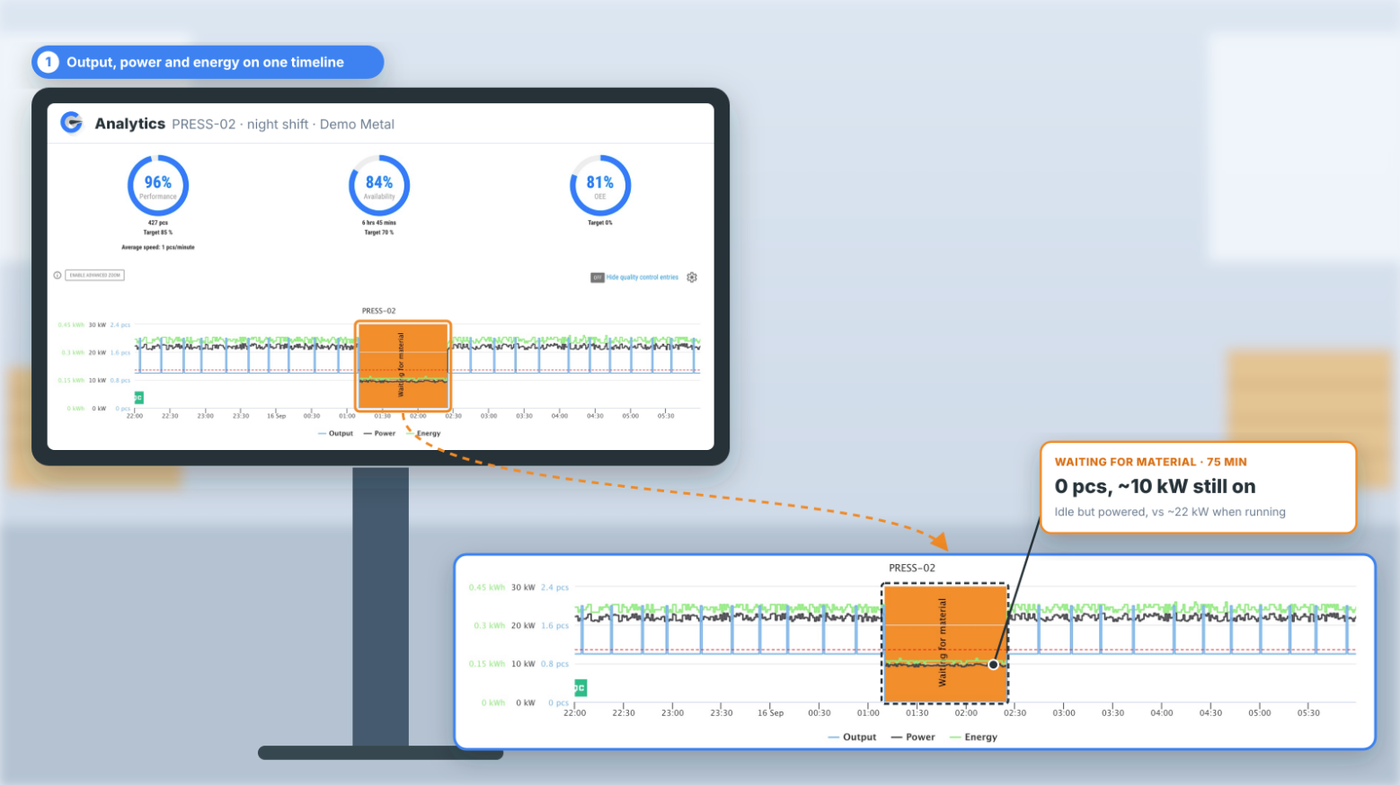
Electricity and compressed air next to output. GlobalReader measures electricity and compressed-air consumption per machine, alongside your production data, so you can see energy used by machines that are running but not producing.
Environmental conditions. Temperature, humidity and noise can be measured at fixed points in the plant and recorded alongside production.
One data source for both audits. The same records support an integrated 9001 and 14001 transition audit.
For a broader look at measurement and sustainability, see our article on green manufacturing.
Frequently asked questions
Has ISO 9001:2026 been published?
Yes. ISO published ISO 9001:2026, the sixth edition of the standard, on 16 September 2026. It replaces ISO 9001:2015. Certified organisations have a three-year transition period, and existing 2015 certificates stay valid until it ends in September 2029.
When does ISO 9001:2015 expire?
ISO 9001:2015 certificates remain valid until the end of the transition period in September 2029. Certification bodies quote 16 or 30 September, so check with yours. Some also report that new initial certificates will only be issued to the 2026 edition from 31 March 2028.
What are the main changes in ISO 9001:2026?
The main changes are quality culture and ethical behaviour in leadership and awareness (5.1, 7.3), a quality policy linked to strategy (5.2), separate actions for risks and opportunities (6.1), stronger management of change (6.3) and climate change in your context (4.1, 4.2). The structure is unchanged.
Do we need a separate audit to transition to ISO 9001:2026?
Usually not. Most certification bodies assess the transition during a surveillance or recertification audit you already have scheduled, or as a separate visit if you prefer. Check when your certification body expects to be accredited for the 2026 edition, and avoid leaving it to the final year.
What evidence shows quality culture under ISO 9001:2026?
Auditors look at behaviour. Useful evidence includes records of operators stopping production for quality reasons, how those stops were handled, quality issues escalated during the shift, and management review minutes that discuss culture. In GlobalReader, operators log stop reasons, comments and scheduled quality checks on the Operator screen as they happen, so these records exist without anyone writing them up afterwards.
Can machine and OEE data be used as ISO 9001 evidence?
Yes, as long as it's relevant to the requirement and your definitions are consistent. Time-stamped stop reasons, scrap with reasons, logged checklists, maintenance history and before-and-after reports can all serve as objective evidence. GlobalReader collects this automatically from any machine, and its Quality Control add-on logs who entered or changed what. The data supports your audit; your auditor decides what it proves.
Do we need ISO 9001 software for the transition?
Not necessarily. A QMS tool handles documents, nonconformities and corrective actions. Production monitoring such as GlobalReader covers the shop floor evidence those records point to: stops, scrap, checks and maintenance, recorded automatically. GlobalReader isn't a QMS. It automates the monitoring and recording, and your management system stays yours. Plants running several shifts usually gain the most from automatic records.
What changed in ISO 14001:2026?
ISO 14001:2026, published on 15 April 2026, widens the environmental context (climate, biodiversity, resources), adds a life cycle perspective, and strengthens supply chain and change management requirements. Certificates must transition by April 2029. GlobalReader measures scrap, electricity, compressed air, temperature and humidity alongside production data, so one system can support both your 9001 and 14001 evidence.
How long should we keep production records for ISO 9001?
ISO 9001 doesn't set one retention period. You decide how long to keep records based on customer, legal and product requirements, and you have to stick to it. Customers in regulated sectors sometimes ask for ten years or more. GlobalReader lets you query your full production history, up to 10 years back, for as long as you're a customer, and you can export it to CSV or Excel for your own archive.
How does GlobalReader help with an ISO 9001:2026 audit?
GlobalReader records what happens on the shop floor as it happens: machine stops and their reasons, scrap with a reason, shift-start checklists and scheduled quality checks, and maintenance done on measured run hours. Reports export to CSV, Excel and PDF for management review or your auditor. GlobalReader data is evidence of what your standard asks you to show. GlobalReader doesn't certify or audit anyone.
Does GlobalReader make us ISO 9001 compliant? Is it ISO certified?
No to both. Only your certification body can certify you, and GlobalReader holds no ISO certification itself. What GlobalReader does is automate the monitoring and recording of production data that supports your audit. Your QMS, procedures, corrective actions and the decisions about them stay with you.
How quickly can we have production records in place before our transition audit?
GlobalReader setup takes 90 minutes per machine, on any machine regardless of brand or age, and a 15-machine factory is typically fully live in two to three days. Most plants start with the one to three machines where records are weakest, then expand. Start at least three months before the audit so you can show the auditor a trend.
Can the auditor trust data from GlobalReader?
Readings are buffered on the device, so a network drop doesn't leave gaps: if the machine is powered, what it measures is kept. Edits made through the Quality Control add-on are logged, data is stored on servers in Europe, and you can query your full history for as long as you're a customer. Your auditor still decides what the data proves.
Walking into your transition audit
When the auditor asks “show me”, the best answer is a report from the shop floor that was written while the work happened. ISO 9001:2026 asks you to show that quality is part of how your plant runs, and you don’t need to buy anything to do that. Start with the clauses where your records are thinnest, give it a quarter, and walk into your transition audit with data instead of binders.
Last updated in October 2026. We’ll review and update this page as certification bodies publish their final transition rules.