

The machine monitoring system that works on every machine you own
Built for factories with 10+ machines and 2+ shifts
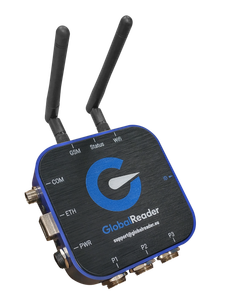
Scoutbox is the device behind GlobalReader's machine monitoring system. It reads a brand-new packaging line and a decades-old saw or press the same way, and turns pieces, metres, run time, energy and every stop into live OEE, in wood and furniture, food, metal and plastics factories.
- Live in 90 minutes
- Hardware and sensors included
- From €125/machine/month
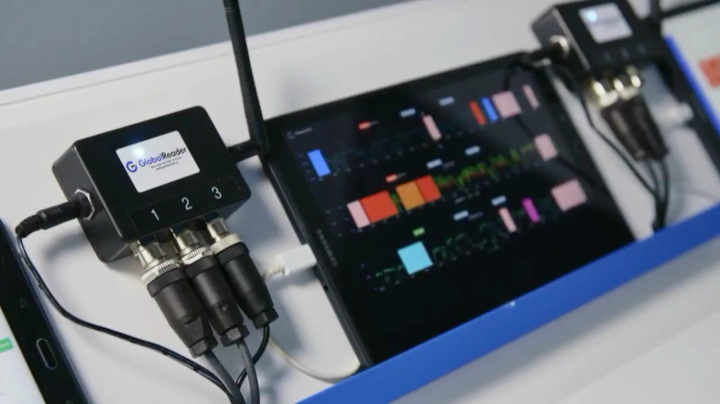
One box per machine, with three sensor inputs and three ways to get online
Every label on the device has a job. Here is what each one does, and why none of it needs your IT team.
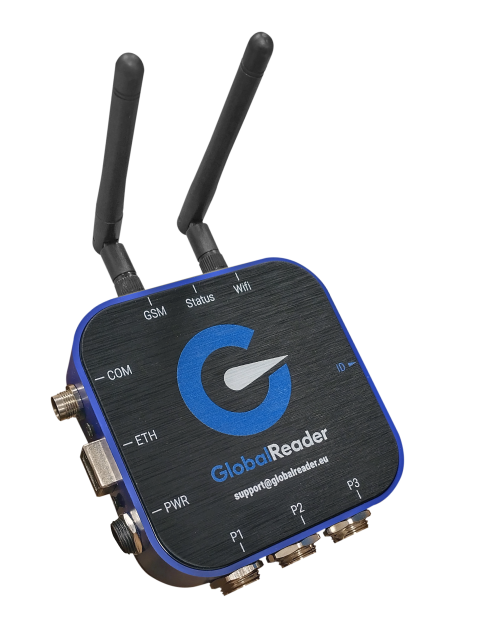
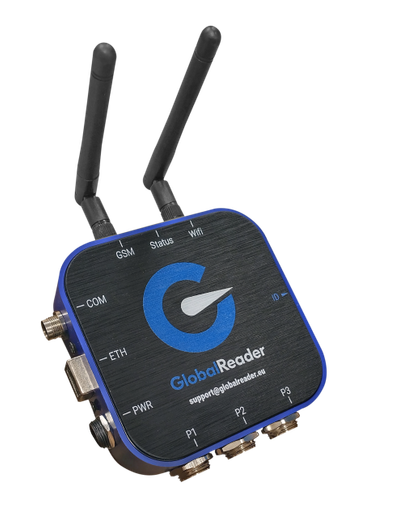
- 1COM: controller connectionReads a machine controller directly where the machine shares its data.
- 2ETH: LANPlugs into your network if you want it to, but it doesn't need to.
- 3Power and a microcontrollerInside is a microcontroller, simple like a TV remote. It boots in 1–2 seconds and has very little that can fail.
- 4GSM and WiFi antennasLTE with a SIM in every unit, plus WiFi. If one connection drops, the other takes over.
- 5A buffer insideReadings wait on the device until they are delivered. Nothing measured is lost.
- 6P1, P2, P3: three sensor inputsSignals can be combined into one value, such as running metres from a photo-eye and a wheel sensor.
- Inputs
- Three sensor ports plus a controller connection
- Sensors
- Included in the subscription; the technician brings every type
- If it breaks
- Replaced free under the subscription
- In service
- Units installed 10 years ago are still reporting

What is a machine monitoring system?
A machine monitoring system is a device on each machine plus software that turns the machine's signals into live availability, performance and quality (OEE), stop alerts and shift reports. GlobalReader's version is Scoutbox: it reads the machine through plug-in sensors or directly over OPC UA and MQTT, sends the data over LAN, WiFi or LTE, and shows every machine live in GlobalReader.
A sensor or the machine itself
Photo-eye, inductive, current or relay signals on any machine. Machines that share data connect over OPC UA or MQTT.
Scoutbox
Collects up to three signals per machine and sends them over LAN, WiFi or LTE.
Servers in Europe
Or the whole system on your own server, running without internet.
Any screen in the factory
Live OEE, stop alerts and shift reports on a phone, tablet, PC or factory TV.
How Scoutbox reads a machine
There are four ways in. Most machines need only the first two, and the technician picks the right one on site.
Photo-eye sensor
Sees material passing, or a part leaving the machine. Counts pieces and metres.
Inductive sensor
Notices each time a metal part of the machine passes close by, like a turning shaft or a saw carriage. Counts cycles.
Relay or current signal
Reads the machine's own logic or its power draw to know when it runs. We don't touch your PLC.
Direct connection
Machines that already share their data connect over OPC UA or MQTT, with no extra sensor.
What it measures
Every Scoutbox counts pieces, metres and work time. The rest is added when a machine or a room needs it.
On every machine
- Pieces
- Metres
- Work time
On request
- Electricity and its cost in euros
- Temperature
- Humidity
- Noise
- Compressed air
- Volume (m³)
- Weight
- Vibration frequency
- Flow
- Distance
- Light
Scrap gets counted too
A dedicated scrap sensor counts rejects automatically, operators add the scrap they count by hand, and the totals flow back to your ERP for material accounting. See Quality Control
A brand-new line or a 30-year-old machine: we get the data either way
Reading a modern machine that already shares its data is the easy part. Most factory floors are full of machines that were never meant to: sawing and veneer lines from the 1990s, second-hand presses, packaging lines and conveyors with no controller at all. Scoutbox reads those with sensors and relay signals, and connects directly to the machines that can talk. Ten years of retrofits in 200+ factories is where that know-how comes from.
Machines that don't share their data
- A photo-eye or inductive sensor on the line or machine
- Or a relay or current signal from its cabinet
- No PLC work and no change to the machine
Machines that share their data
- A direct connection over OPC UA or MQTT
- No extra sensor needed
- The same live OEE and reports as every other machine
Machines we connect every day: veneer slicers and sawing lines, packaging and bottling lines, presses and CNC machines, injection moulders, assembly stations.
Packing, assembly or painting stations with no machine? Manual Work Station tracks those too.
Live in two to three days
Here is what installation looks like for a 15-machine factory.
Day 1, morning
The technician arrives with every sensor type
No PLC work needed. Each machine takes about 1.5 hours.
Day 1, evening
A third of the machines are reporting
The first machines already show live OEE, stops and shift data.
Day 2 to 3
All 15 machines are live
Stop alerts and shift reports run for the whole floor.
Or start with one to three machines
Our usual advice: start small, see your real numbers, then add the rest of the floor.
Adding a sensor later?
We ship it with a photo showing where it goes, and your own mechanics fit it.
Installation is a one-time fee of €137 per device.
"We installed everything ourselves. It's quite easy if you have somebody who knows how the machine works."
Your data survives the factory WiFi
Scoutbox was built for factory floors, with their thick walls, machines that interfere with radio and networks nobody wants to touch.
- Three ways online
- LAN, WiFi and LTE in every unit, SIM included, with automatic failover.
- Buffered end to end
- Readings wait on the device until they are delivered. If the machine is powered, what it measures is never lost.
- Servers in Europe
- Or the whole system on your own server, running without internet.
- Ten years of history, and exports
- Your full history stays available for as long as you are a customer, with CSV, Excel and PDF exports, scheduled email reports and a REST API.
What you see once the machines are connected
Scoutbox is half the system. The other half is the GlobalReader machine monitoring software every reading lands in.
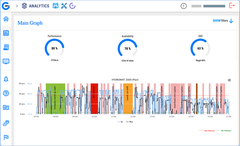
- Live OEE for every machine and shift
- Availability, performance and quality, worked out from the machine data as it arrives.
- An alert when a machine stops
- Set how long a stop may last before the right person hears about it.
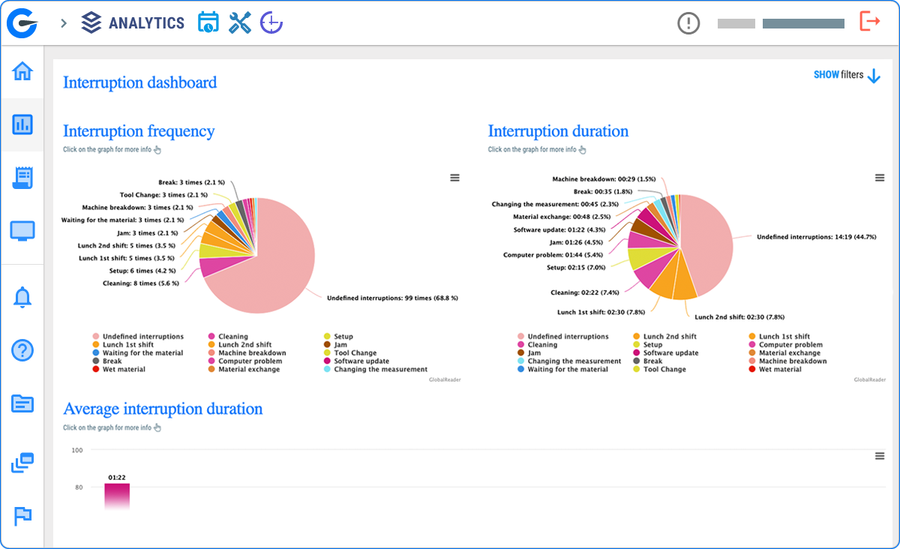
- The reason behind every stop
- Operators pick it in seconds on the screen at the machine.
- Reports in any dimension
- By machine, product, operator or shift, including the loss waterfall that shows which stops cost the most.
Your ERP stays in charge. Orders flow down to the operator, and finished quantities and scrap flow back. Delivered for Monitor, Microsoft Dynamics, SAP, Directo, NOOM, Eziil and others, fitted to how you use your ERP.
Hardware, sensors, software and support in one subscription
€125
per machine per month
- Scoutbox hardware, sensors and cables
- Analytics software and notifications
- Support from people who know manufacturing
- Free hardware replacement
One-time: installation €137 per device, extra sensor and cable €95. Pay yearly in full and save 5%.
Book a Demo| Compared on | GlobalReader | Typical OEE tool | Enterprise MES |
|---|---|---|---|
| Hardware | Included, and replaced free | Rented or bought separately | A separate project |
| Setup | About 90 minutes per machine | 1 to 4 weeks | 6 to 12 months |
| Older machines | Retrofitted with sensors | Often limited | A custom project |
| IT team needed | No | Minimal | Dedicated |
| Best for | Live data from every machine, old or new, within days | Modern machines that already share their data | Large plants that need full process control and traceability |
GlobalReader factories recover on average €39,200 per machine per year. At €100 or more an hour of factory time, little more than one recovered hour a month covers the subscription.
Calculate your factory savings- +27.4%
- average OEE improvement
- +22.8%
- average availability improvement
- €39,200
- recovered per machine per year
- 200+
- factories monitored across Europe
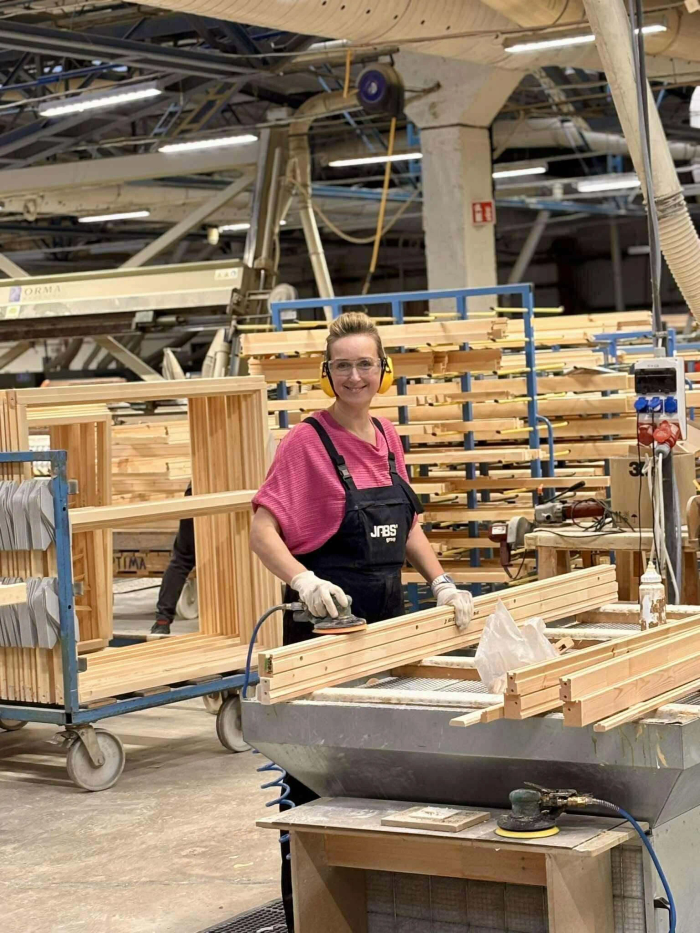
JABS Sokółka, Poland
1,000 more windows a month, without buying a new machine
Half of the 50 machines are more than 20 years old. The team fitted the sensors themselves, and supervisors now watch live output and stop reasons every day.
"Operators want to talk. Now we see the interruptions they mark, and we ask: what should we do about this? It's very good for both sides."Read the JABS story
"With the use of GlobalReader monitoring equipment on different machines, we now have a better insight into the efficiency of the operation of these machines."
Factories running GlobalReader







Machine monitoring system questions
The questions production managers and IT teams ask us most. Something missing? Ask us directly.
What is a machine monitoring system?
A machine monitoring system is a device on each machine plus software that turns the machine's signals into live OEE, stop alerts and shift reports. GlobalReader's version is Scoutbox: sensors or a direct OPC UA or MQTT connection on each machine, data sent over LAN, WiFi or LTE, and every machine shown live in GlobalReader.
Is machine monitoring the same as condition monitoring?
No. Condition monitoring tracks the health of a machine, such as bearing vibration, so maintenance can plan repairs. A machine monitoring system like Scoutbox tracks production: whether the machine runs, what it makes and why it stops, which is what OEE is built from. Scoutbox can read extra signals such as vibration frequency, temperature or compressed air on request, but production monitoring is its job.
Does it work on old machines with no PLC or network connection?
Yes. Scoutbox reads older machines with photo-eye and inductive sensors or a relay or current signal, so it needs no PLC access and no machine network. At JABS Sokółka, 25 of the 50 machines are more than 20 years old, and the team fitted the sensors on the older machines themselves.
Which industries is it built for?
Discrete manufacturers with 10 or more machines and two or more shifts. Most of our customers are wood and furniture, metal and food and beverage factories, and we also monitor plastics, packaging and electronics lines. What Scoutbox counts follows the line: metres on sawing and veneer lines, pieces on packaging and bottling lines, cycles on presses and injection moulders.
Where does Scoutbox get the cycle time from?
From a signal that changes once per cycle: the machine starting and stopping, a sensor seeing a part or a stroke, a relay or controller output, or the machine's power draw. A stop is counted when no cycle arrives for a time you set for that machine.
How many sensors does one machine need?
Each machine gets one Scoutbox with three sensor inputs. Signals can be combined into one value, such as running metres from a photo-eye and a wheel sensor, or several tools at one station counted as that station's work time. The technician decides on site what each machine needs.
Which sensors are best for real-time data collection on the factory floor?
For most machines, a photo-eye sensor (for pieces and metres) or an inductive sensor (for cycles) does the job, and those two types cover most of our installs. A relay or current signal shows when a machine runs. Machines that already share their data connect directly over OPC UA or MQTT.
Do we need WiFi or access to our network?
No. Every Scoutbox ships with a SIM card and connects over LTE. If you have LAN or WiFi it can use those too, and if one connection drops it switches to another automatically.
What happens if the connection drops?
Nothing is lost. Readings wait on the Scoutbox until they can be delivered. If the machine is powered, what it measures is never lost.
How long does installation take, and can we do it ourselves?
About 1.5 hours per machine with our technician, so a 15-machine factory is live in 2 to 3 days. Sensors added later can be fitted by your own mechanics from a photo we send. JABS Sokółka installed its hardware itself, using our instructions.
How do we monitor CNC machines without PLC access?
A relay or current signal shows when the CNC runs, and a sensor counts cycles or parts, so Scoutbox reads the machine without touching its controller. Where a CNC already shares its data, it connects over OPC UA or MQTT. Compare CNC machine monitoring software.
What does a machine monitoring system cost?
GlobalReader is €125 per machine per month, including the Scoutbox, sensors, Analytics software, notifications and support, with free hardware replacement. Installation is a one-time €137 per device.
Where is our data stored?
On GlobalReader's servers in Europe. If your data has to stay inside the factory, the whole system can run on your own server without internet.
Does it connect to our ERP?
Yes, in both directions: orders flow down to the operator, and finished quantities and scrap flow back. Every integration is fitted to how you use your ERP, and we have delivered them for Monitor, Microsoft Dynamics, SAP, Directo and others. See ERP integrations.
Is this monitoring our operators?
It measures machines, not people. Operators add the reason when a machine stops, which puts their side of the story on record instead of leaving it to guesswork.
Bring your oldest machine to the demo
Book 30 minutes. Tell us about the machine nobody has managed to connect, and we will show you how we would read it.