

Boonus · add-on for the GlobalReader Monitoring Core
A production bonus system that runs on machine data.
GlobalReader's Boonus turns the machine data GlobalReader already collects into operator bonuses. You decide which numbers count, OEE, output, availability or a sensor reading, and which bands pay what. Boonus works it out every month from what the machines actually delivered, so nobody argues about the arithmetic and nobody spends two days in Excel.
- Bands you set
- Single machines or groups
- €13 per machine per month
Boonus isn't switched on for your account yet
Tie bonuses to the numbers your team already sees
Your machines already send the data. Add the bands, and GlobalReader's Boonus calculates every bonus from it, per machine or per group, with the expected percentage shown to the operator on their own screen.
€13 per machine per month, added to your current plan.

The bonus ladder

What is a production bonus system?
A production bonus system pays operators extra when measured output or efficiency crosses agreed bands. The fair ones use machine data that was collected automatically; the unfair ones use a foreman's impression or a month-end spreadsheet. Boonus is GlobalReader's bonus system, an add-on to its modular MES for SME manufacturers: you choose the metric (OEE, output, availability or a sensor reading) per machine or group, set the bands, and it calculates every bonus from what the machines recorded.
How a measured shift becomes a bonus
Pick the numbers that count
OEE, speed, availability, produced volume or a sensor reading, per machine or per group of machines.
Set the bands
For example, 70% OEE pays 5% and 80% pays 10%. The logic is yours; Boonus applies it the same way to every shift.

Boonus counts
At month end every bonus is calculated from the measured data. You get the figures ready to apply; payroll stays as it is.
Sound familiar?
A bonus only motivates if people believe the maths.
The owners want volume, so the bonus is per piece. Then ten or twenty per cent of it comes back as scrap.
Someone spends two days a month in Excel working out the bonus, and the floor still thinks it's unfair.
The group leader said: pay a bit more and we'll ship it tonight. It was inside normal hours.
We tried a bonus scheme once. Nobody trusted the numbers, so it died.
Every one of those is the same problem: the bonus rests on a number somebody has to take on faith. GlobalReader's Boonus builds it on the machine data the team already sees every shift, with bands everyone can read.
Per piece pays for volume. OEE pays for volume you can sell.
Paying per piece rewards speed and ignores what the speed costs: scrap, rework, a machine run past its setting. OEE already contains the answer. Availability, performance and quality in one number means an operator cannot earn the bonus by making more bad parts faster.
GlobalReader's Boonus lets you pay on OEE, or on availability or output where that is the honest measure for the station, and it reads the numbers from the machine, not from a tally sheet.
“You can get volume, but if ten or twenty per cent of it is scrap made to get the bonus, there's no point.”
One report: the rule, the result per workstation, the result per person
The Bonus tab in Report Builder is where the month is settled. At the top, the rule as you set it: the metric it measures, the workstations it covers, the bands and the date it became active. Below it, the measured result for each workstation or group over the period, and then the same measure per person, grouped by team or shift, with the bonus percentage each one reached.
- 1The rule, as you set itThe metric it measures, the workstations it covers, the bands and the date it became active.
- 2The result per workstation or groupProductions and hours from the machine data, the measured OEE for the period, and the band it reached.
- 3The result per personThe same measure for each operator on those workstations, grouped by team or shift, with the bonus percentage next to it.
One team, one bonus, weighted fairly
For workstation groups GlobalReader's Boonus sums the device-level results into a weighted average, so a big line and a small station both count, in proportion. The people on the packing station are not carried by the press line, and the press line is not dragged down by one slow afternoon at the end of the hall.
That is the part manual schemes get wrong: group bonuses collapse when one loud machine or one loud person dominates the number. Here the weighting is set once and applied the same way every month, and anyone can check it.
- Per machine or per group
- Weights follow each machine's share
- Same rule every month
The target is visible, and so is the fairness
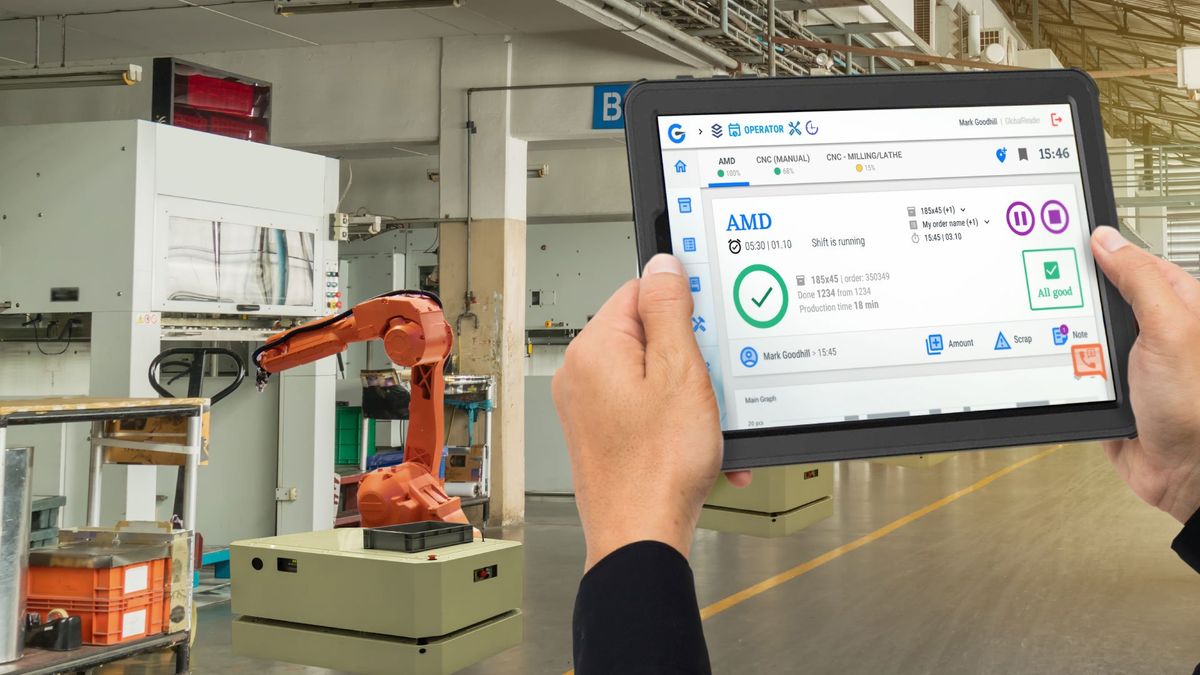
In the Operator view the expected bonus percentage can sit on a card next to the shift's numbers, so an operator knows during the month whether they are on track, long before the payslip arrives. The data behind it is the same data they log stops against every day. There is no second system and no hidden formula.
- The bands are written down before the month starts
- The same rule for the day shift and the night shift
- A stop logged as a breakdown is a breakdown, not the operator's fault
- Good shifts count even when nobody was watching
“Operators want to talk. Now we see the interruptions they mark, and we ask: what should we do about this?”
Who it is for
Four people have to agree before a bonus scheme works. Boonus gives each of them the same number to agree on. It calculates the bonus from the measured result of a machine or a group; it does not score people against each other, and it is not a payroll or HR system.
Production manager
An incentive scheme with no refereeing.
Set the rules once; Boonus applies them. The two-day Excel ritual goes away, and so do the arguments about whose number is right.
Owner or CEO
Pay more only when the factory earned more.
A bonus tied to OEE pays for output you can sell.
HR or the works council
Rules, not opinions.
A documented, consistent formula on measured data settles a fairness dispute before it starts.
Operators
Your good work counts, on the record.
In a number you can check yourself, on the screen you already use every shift.
€13 per machine per month. Payroll stays where it is.
GlobalReader's Boonus is an add-on to the Monitoring Core, the measured machine data the bonus is calculated from. The price does not change with the number of operators or bands, and there are no tiers.
€13
per machine per month
Added to the Monitoring Core: €125 per machine per month, with the Scoutbox, sensors, Analytics, notifications and support included.
The operator's bonus card is shown in the Operator view (€26 per machine per month).
Pay yearly in full and save 5%.
Book a demoWhat you get
- Automated bonus calculation from measured machine data
- Your choice of metric: OEE, speed, availability, volume or a sensor reading
- Bands and thresholds you define, per machine or per group
- Weighted group logic, so every machine counts in proportion
- Expected bonus percentage visible to the operator in the Operator view
- Figures ready to apply at month end
GlobalReader's Boonus calculates the bonus. It does not change your payroll system or push figures into your ERP. You get the results at month end and apply them the way you do today.
GlobalReader's Boonus costs €13 a machine. One operator who keeps a line running ten minutes longer a day covers it many times over.
Calculate your factory savingsBoonus questions
The questions production managers and owners ask us about bonuses on machine data. Something missing? Ask us directly.
What is a production bonus system?
A production bonus system pays operators extra when measured output or efficiency crosses agreed bands. Boonus is GlobalReader's version: you choose the metric (OEE, speed, availability, produced volume or a sensor reading) per machine or group, set the bands, and it calculates every bonus at month end from what the machines recorded.
Is it fair to base operator bonuses on machine data?
Fairer than the alternatives. A discretionary bonus rewards whoever gets noticed; a per-piece bonus rewards speed whatever it costs. Measured OEE applies the same rule to every shift and lets an operator check the number behind their own bonus. Fairness comes from the rule being visible, which is why GlobalReader's Boonus shows the bands and the expected percentage rather than hiding the formula.
Which metrics can a bonus be based on?
OEE, speed, availability, produced volume or a sensor reading, per machine or per workstation group, with bands you define. Most factories start with OEE because it already contains quality, so nobody earns the bonus by making more bad parts faster.
Can we pay on volume instead of OEE?
Yes, produced volume is one of the metrics a band can rest on, per machine or per group. Many factories that start on volume move to OEE once the scrap behind a volume bonus becomes visible in the same data; both run on the numbers the machines record, so the switch is a change of setting.
Can operators see their bonus during the shift?
The expected bonus percentage and the efficiency it rests on can be shown on a card in the Operator view, so the operator knows during the month where they stand, long before the payslip arrives. The calculation itself is done at month end.
How are group bonuses calculated?
Device-level results are weighted by each machine's share and summed into one group result, so the big line and the small station both count in proportion. The weighting is set once and applied the same way every month.
How often is the bonus calculated?
At month end, from the measured data for the period. The operator-facing card shows the expected percentage as the month runs.
Does it replace or connect to our payroll system?
No. GlobalReader's Boonus produces the figures; payroll stays exactly as it is. Most ERPs have no field for a bonus coefficient, so there is no push into the ERP either. You take the month-end results and apply them the way you do today.
How much does bonus calculation software cost?
GlobalReader's Boonus is €13 per machine per month as an add-on, on the Monitoring Core from €125 per machine per month with the Scoutbox, sensors, Analytics, notifications and support included. See the pricing page for the full list.
What is the difference between a production bonus and gainsharing?
Gainsharing shares a site's financial gains with everyone; a production bonus rewards measured performance at the machine or team level. GlobalReader's Boonus automates the latter from machine data, so the link between what a team did this month and what it earns is direct and checkable.
Will operators accept it?
Operators are usually quickest to back it. The target is visible, the data is the data they already see at the machine, and their good shifts count even when nobody was watching. At JABS Sokółka operators went from unheard to part of the improvement loop once their own numbers were on the screen.
Reward performance you can measure
See GlobalReader's Boonus set up on your own machines' numbers in a 20 minute demo: the metric, the bands, and what the operator sees.
Add-on to your existing GlobalReader setup · Bands you control · Transparent to the whole team